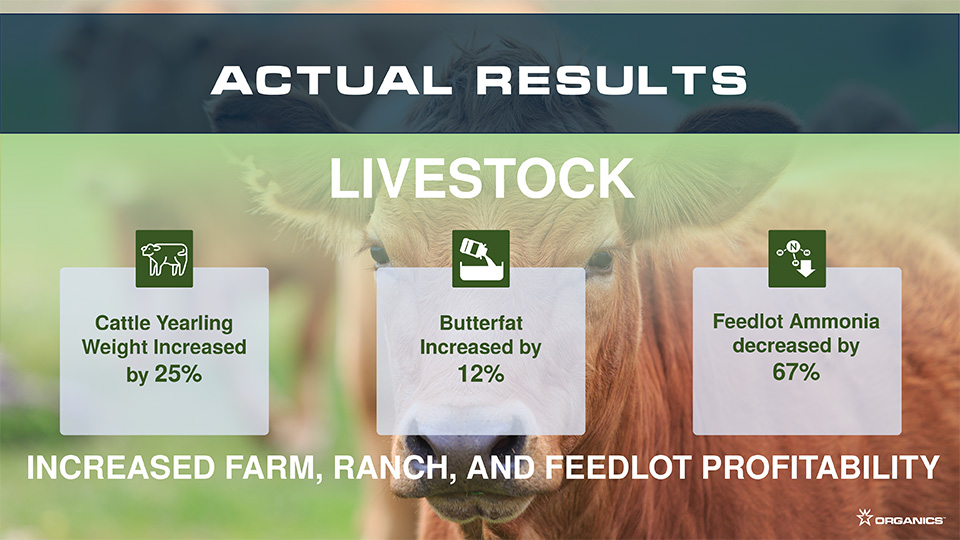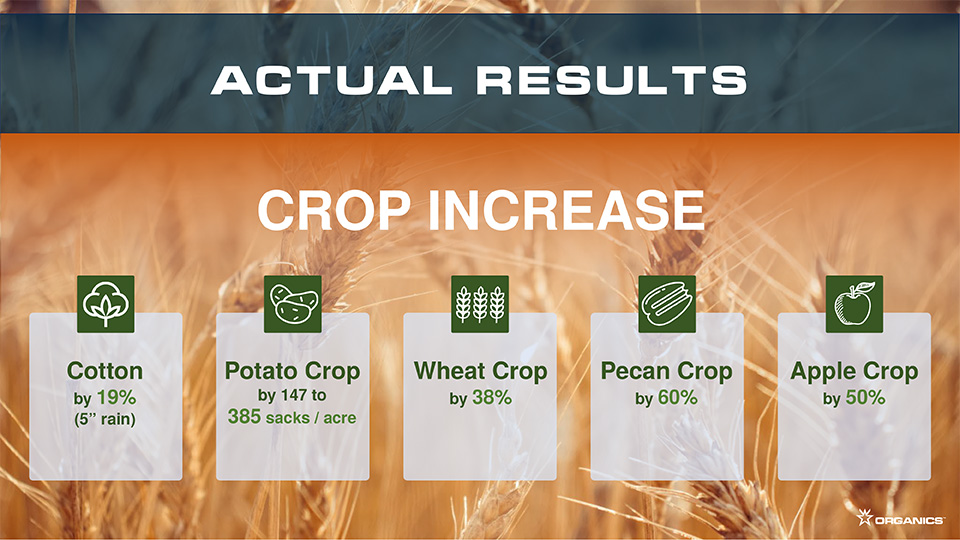
Plants grown in soil rich with humic substances:
- Produce higher yields
- Provide better nutrition
- Are less subject to stress
The benefits of humates and other humic substances are extensive. They are a rich source of energy and beneficial bacteria and fungi which aid overall plant health.
- These bacteria and fungi also protect against plant pests, thereby providing a natural form of protection.
- Humates are a safe addition to crop fields or gardens of any size.
Some of the many benefits include:
- Increase of soil crumbs & decreasing erosion
- Soil crumb holds 7X its volume in water
- Growth during dry seasons and drought
REDUCED COST VS. FERTILIZERS
- Synthetic chemical fertilizers are manufactured and are normally expensive.
- To get a good harvest, the grower must apply fertilizers every year which limits the potential of the soil and renders a plant void of nutrients and trace minerals.
- Applying too much synthetic chemical fertilizers will burn the crop and result in crop failure.
Blending humates with synthetic fertilizers has many benefits to assist in bringing the soil back to life and increasing yield and quality of harvest.
- The greatest benefit is achieved when no synthetic fertilizers are used. Soil is active with microbial and earthworm life.
- Applying too much humate will not cause crop failure and may increase yield.
- Use of humates has an inverse economic curve. As humates are applied, year after year less is required to sustain/increase yield.
Big potential savings over cost of fertilizers.
MORE EFFECTIVE OPTION VS. TRADITIONAL N-P-K FERTILIZERS
N-P-K stands for nitrogen, phosphorus, and potassium (the three primary nutrients plants need to grow.)
Soil scientists and agronomists recognize the important role of humic substances in maintaining a healthy soil.